
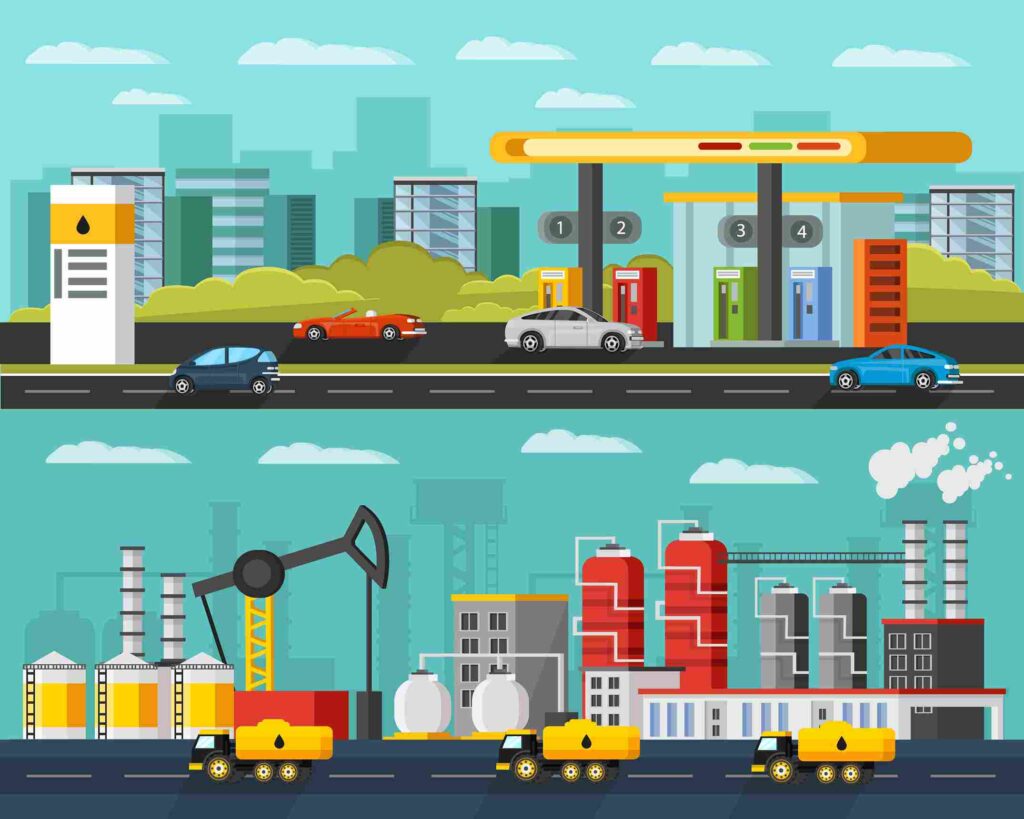
Fuel Companies play a massive role in keeping America moving—but not all of them operate at the same level.
Let’s be honest…
- Why do some fuel companies dominate entire regions while others struggle to stay competitive?
- Why do some always have supply, even during shortages?
- And how do certain companies keep prices competitive while still making strong profits?
If you’ve ever thought about working with, investing in, or competing with fuel companies, these questions matter more than you think.
What Defines Top Fuel Companies in the US Market?
At a glance, most fuel companies may look similar. They all supply gasoline, diesel, or other petroleum products.
But behind the scenes?
The difference is strategy, infrastructure, and execution.
Top-performing companies focus on:
- Efficiency
- Reliability
- Strong partnerships
- Smart expansion
1. Strong Supply Chain & Logistics
This is where the real game is played.
Top fuel companies don’t just sell fuel—they control how it moves.
What they do differently:
- Multiple supply sources (not relying on just one refinery)
- Strategic storage facilities
- Reliable trucking and distribution networks
- Backup plans for disruptions
When shortages happen, these companies stay operational while others scramble.
2. Consistent Pricing Strategy
Pricing isn’t random—it’s calculated.
Leading fuel companies:
- Monitor market trends daily
- Adjust pricing based on supply and demand
- Protect margins without losing customers
Simple truth:
The best companies balance competitive pricing + profitability
3. Strong Relationships with Clients
This is often overlooked.
Top fuel suppliers don’t just sell—they build relationships.
They focus on:
- Long-term contracts
- Reliable delivery schedules
- Transparent communication
- Fast issue resolution
Think of it like this…
If a gas station or business trusts you, they won’t switch easily—even if prices fluctuate slightly.
4. Smart Expansion Strategy
Not every location is a good opportunity.
Top fuel companies expand with intention.
They look at:
- Demand in the area
- Competition within a radius
- Transportation access
- Growth potential
Instead of expanding everywhere, they expand where it makes sense
5. Technology & Data-Driven Decisions
This is where modern fuel companies are pulling ahead.
They use:
- Real-time pricing tools
- Route optimization software
- Inventory tracking systems
- Demand forecasting
Why it matters:
Better data = better decisions = higher profits
6. Diversification Beyond Fuel
Here’s something interesting…
The top players don’t rely on fuel alone.
Many fuel companies are expanding into:
- Convenience retail
- EV charging stations
- Alternative fuels
- Fleet management services
This protects them from market shifts and future-proofs their business.
7. Regulatory Compliance & Safety
Fuel is a highly regulated industry.
Top companies stay ahead by:
- Following environmental regulations
- Maintaining safety standards
- Training staff properly
This avoids:
- Fines
- Shutdowns
- Reputation damage
8. Brand Reputation & Trust
Let’s keep it real…
Reputation matters.
Top fuel companies build trust through:
- Consistency
- Reliability
- Professional service
And once that trust is built?
It becomes a competitive advantage.
A Real-World Example
Imagine two fuel companies operating in the same city.
Company A:
- Cheapest pricing
- Unreliable deliveries
- Poor communication
Company B:
- Slightly higher pricing
- On-time deliveries
- Strong relationships
Guess who wins long-term?
Company B. Every time.
Because reliability beats short-term savings.
Common Mistakes Smaller Fuel Companies Make
Let’s break this down honestly.
Here’s where many fuel companies fall short:
- Relying on a single supplier
- Competing only on price
- Expanding too quickly
- Ignoring customer relationships
- Not investing in technology
These mistakes limit growth and increase risk.
How to Choose the Right Fuel Company
If you’re a business or partner, here’s what to look for:
✔ Reliability
Do they deliver consistently?
✔ Pricing Transparency
Are there hidden costs?
✔ Infrastructure
Do they have strong logistics?
✔ Customer Support
Can you reach them when needed?
✔ Flexibility
Can they scale with your needs?
FAQs About Fuel Companies in the US Market
1. What do fuel companies do?
Fuel companies supply gasoline, diesel, and other energy products to businesses, gas stations, and industries.
2. How do fuel companies make money?
They earn through fuel distribution margins, contracts, and additional services like logistics and retail.
3. Are fuel companies still profitable in 2026?
Yes. Despite energy shifts, demand remains strong, especially in transportation and logistics.
4. What makes a fuel company reliable?
Strong supply chains, consistent delivery, and transparent communication.
5. Are fuel companies moving toward renewable energy?
Many are diversifying into EV infrastructure and alternative fuels to stay competitive.
Final Thoughts
At the end of the day, the difference between average and top-performing fuel companies isn’t just about fuel—it’s about how they operate, scale, and build trust.
The companies that win are the ones that:
- Plan ahead
- Invest in systems
- Focus on relationships
- Adapt to change
And in a fast-moving market like the US, that’s what separates the leaders from the rest.
If you’re looking to understand or work with fuel companies, knowing these differences gives you a serious advantage.
